
Bag, Bivouac, Waterproof (Army Cocoon)
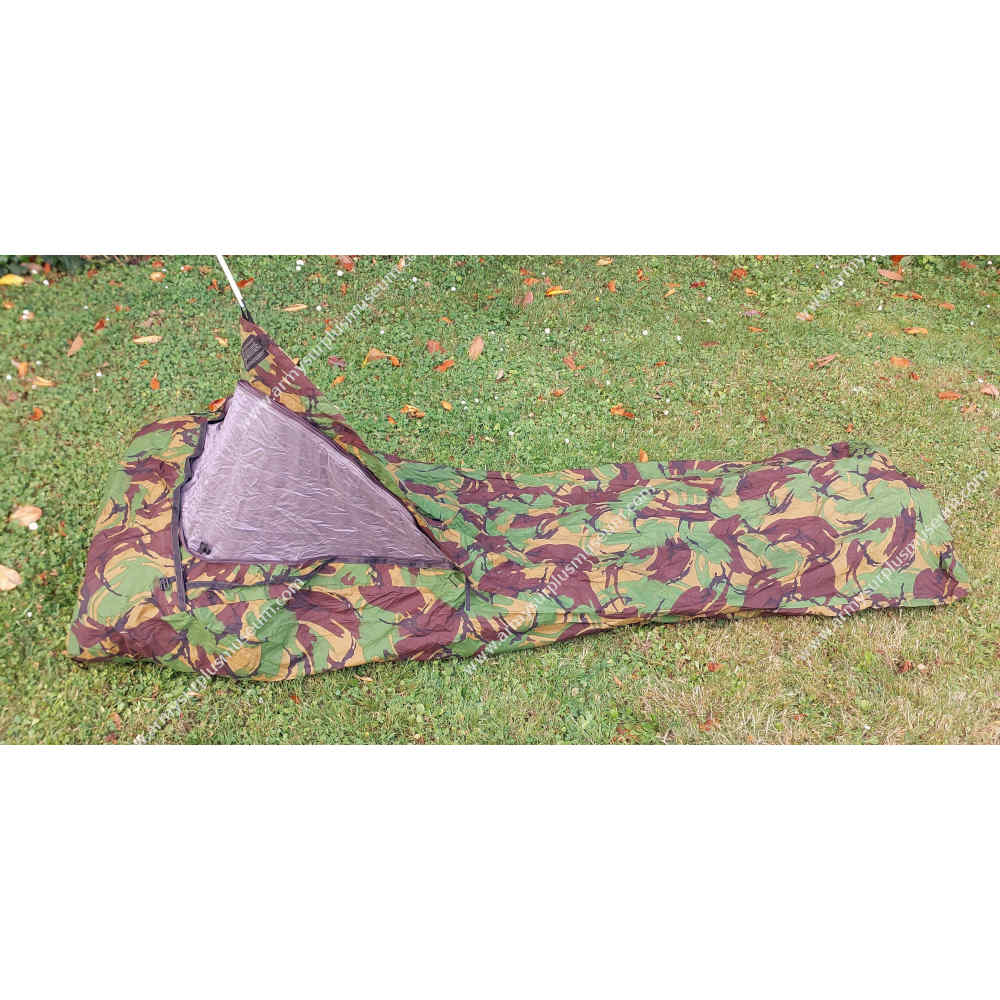
General Information
Name: Bag, Bivouac, Waterproof 1 (Army Cocoon)
Country of Origin: New Zealand.
Date of Production: circa 2005.
Manufacturer: Macpac.
NATO Stock Number (NSN): Yet to be identified.
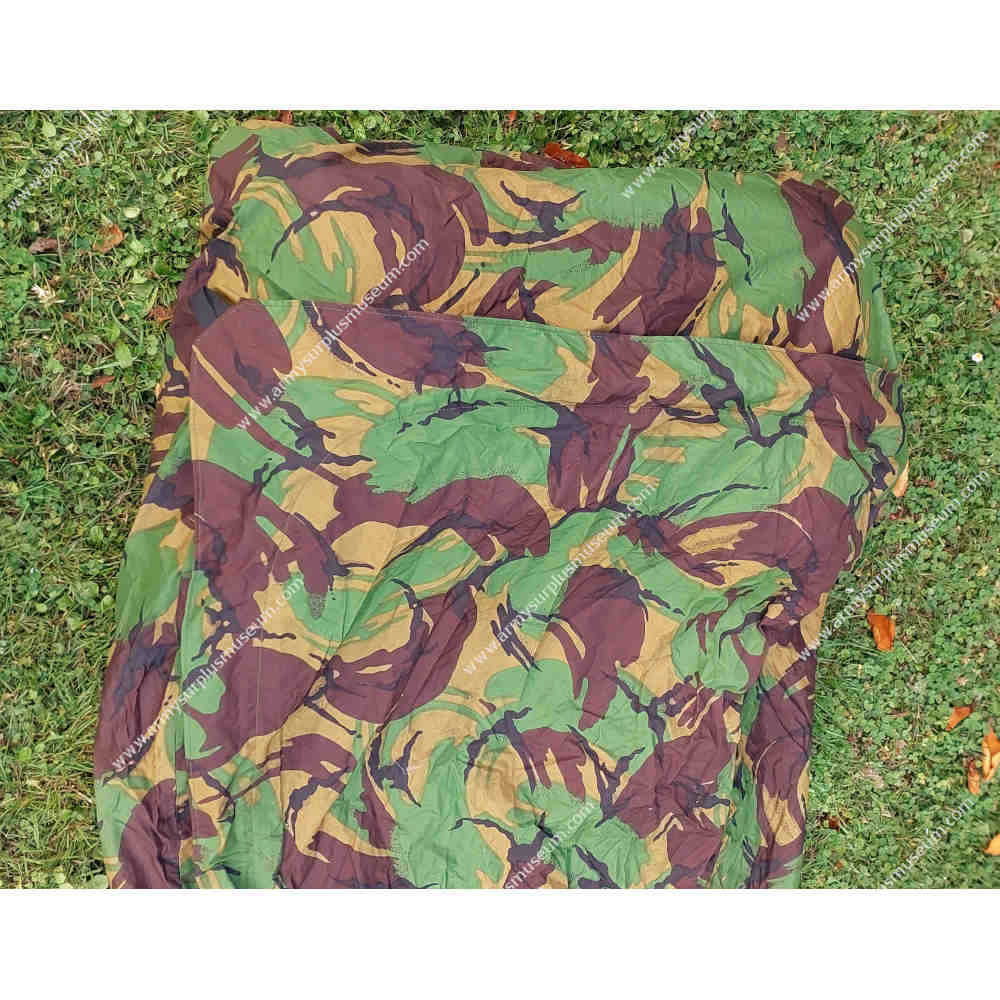
Camouflage Pattern: Temperature Disruptive Pattern Material (DPM).
Weight: 1.2kg.
Dimensions: 2.2 m (L) × 98cm (W).
Windproof: Yes.
Waterproof: Yes, but depends on the condition of the fabric.
History
The Bag, Bivouac (Waterproof) is based on the Macpac Cocoon bivvy bag, originally developed in the mid-1990s as a lightweight civilian sleeping shelter. Designed to work in conjunction with equipment already carried by the user, the Cocoon utilized a simple, non-structured form that allowed a pack to be positioned at the head to create headspace, removing the need for poles or rigid supports.
This approach differed from many bivouac shelters of the period, which were often effectively scaled-down tents requiring structural components. By eliminating unnecessary elements, the design prioritized reduced weight, simplicity, and speed of use—characteristics that would later prove well suited to military application.
The design was adopted into military use through private purchase by New Zealand soldiers, who recognized its advantages in the field. Its low profile, rapid deployment, and ease of exit made it particularly effective in operational environments. This early use appears to have led to the development of military-specific variants, with the New Zealand Army utilizing versions of the design through to circa 2015, produced in olive drab, DPM, and later in coyote tan.
During operations in East Timor in the early 2000s, the bivvy gained further recognition among other forces. Irish soldiers, issued with the Arktis double-hooped bivvy (a semi-structured, pole-supported shelter) in olive drab, were noted to favour the Macpac design due to its faster deployment and recovery, and the absence of poles or additional components. In comparison, the non-structured bivvy could be packed down more rapidly and allowed for quicker exit—an advantage in mobile or uncertain operational environments.
Description
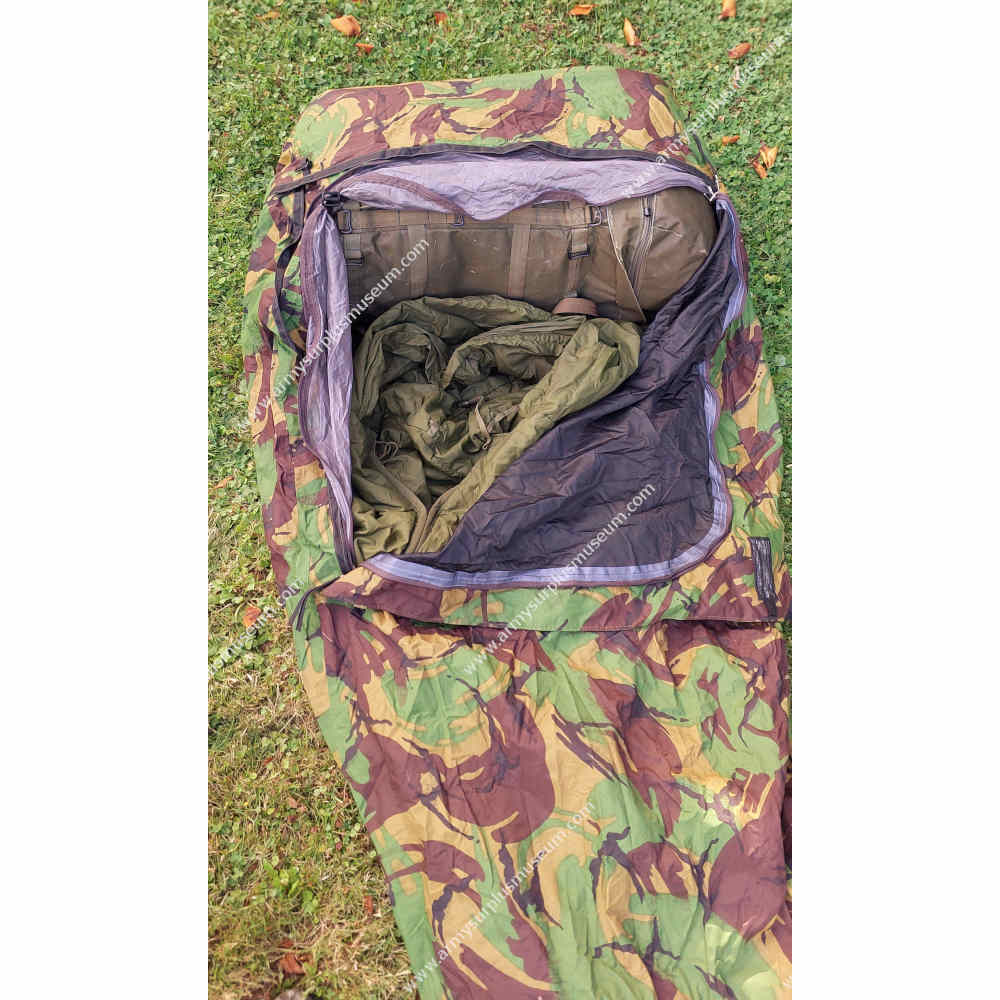
The bivouac bag is constructed from Milair waterproof-breathable fabric, with all internal seams sealed using fabric seam tape to ensure water resistance. The overall form is a tapered mummy shape, measuring approximately 2.2 m in length, with a maximum width of around 98cm at the shoulders, narrowing toward both the head and foot ends.
An enlarged hood section is incorporated at the head, providing sufficient internal volume to accommodate a field pack. This allows the upper section of the bivvy to be lifted clear of the user’s face, creating usable breathing space without the need for rigid supports.
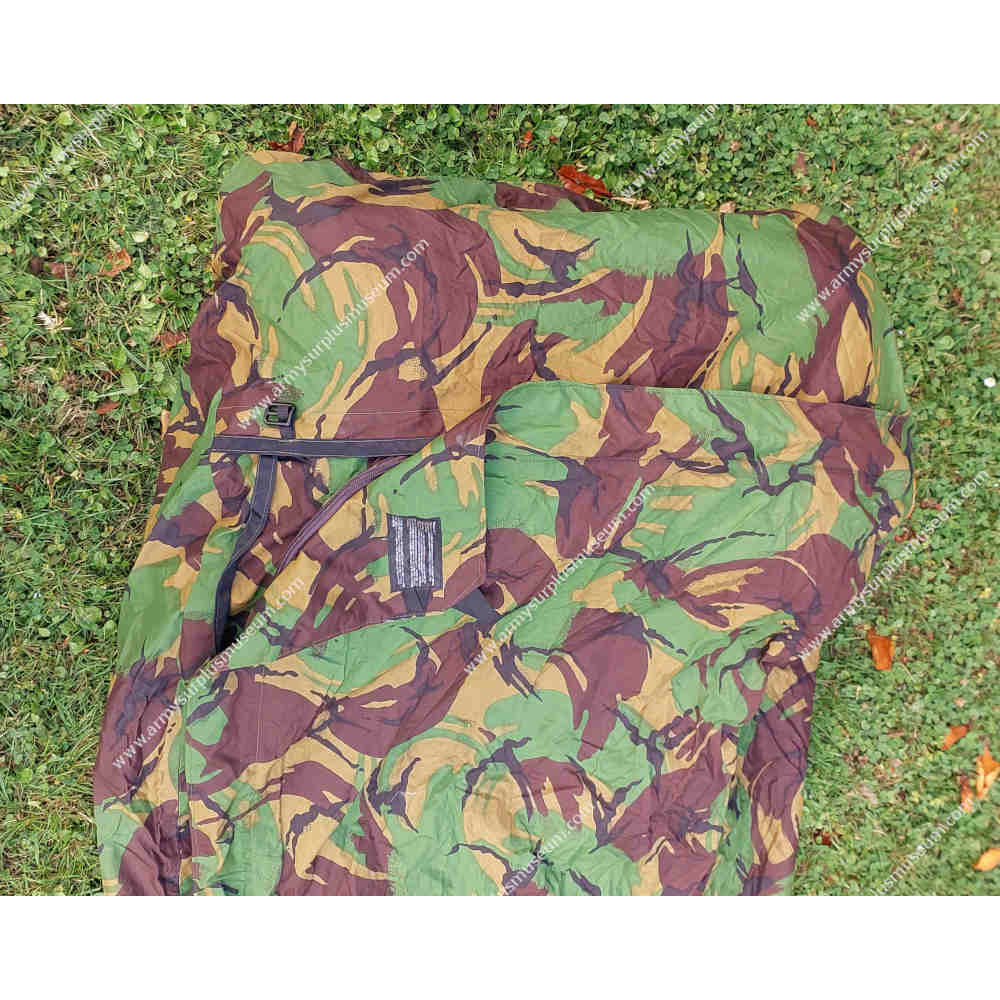
The hood is closed by a quarter-length nylon zip fitted with double metal runners and protected by an extra-wide storm cover. Internally, a large fine-mesh mosquito net is fitted, which can be deployed and suspended above the user’s head using a length of paracord attached to a nylon webbing loop sewn to the leading edge of the storm cover closure tab, and secured to an external support such as a tree branch.
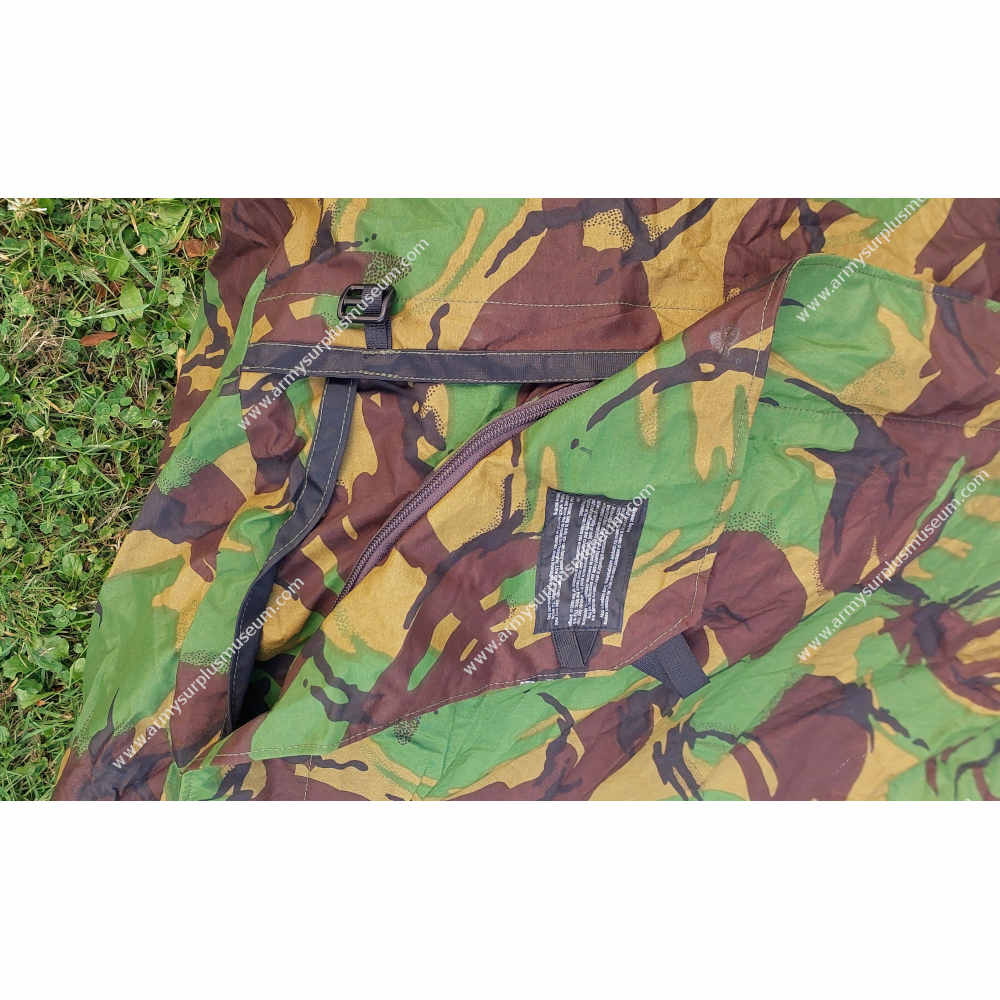
A secondary zip system runs around the head section and down the left side of the bivvy. This consists of two three-quarter-length metal zips fitted with double runners. The inner zip secures the mosquito net, which measures approximately 37 cm at its widest point. When not in use, the net can be stowed to the side using an elastic loop and tri-glide buckle. Both sets of zips can be operated from the inside.
The outer zip follows the same path and closes the hood over the user. It can be partially secured using an elastic loop and tri-glide, allowing rapid opening and increased airflow. The main closure is protected by a storm flap approximately 7.5cm wide to reduce water ingress.
At the front of the hood, a webbing loop is sewn into the storm cover, allowing a cord to be attached and used to lift the hood when tied off to a fixed point. This feature is particularly effective when used in conjunction with the mosquito net. Additional webbing loops are located at the base of the head section on both sides, enabling the bivvy to be pegged down.
The bivvy is supplied with a Milair stuff sack measuring 31 cm long, 20 cm wide, and 9 cm high. The stuff sack is fitted with a black polyester drawcord and plastic barrel-lock closure. A nylon webbing strap is sewn around the sack and adjusted with a plastic ladder-lock buckle, allowing the packed bivvy to be compressed once rolled and stored.
It should be noted that the bivvy requires some effort to repack into the stuff sack, and must be rolled in a controlled manner to fit correctly.
Examples
Example One
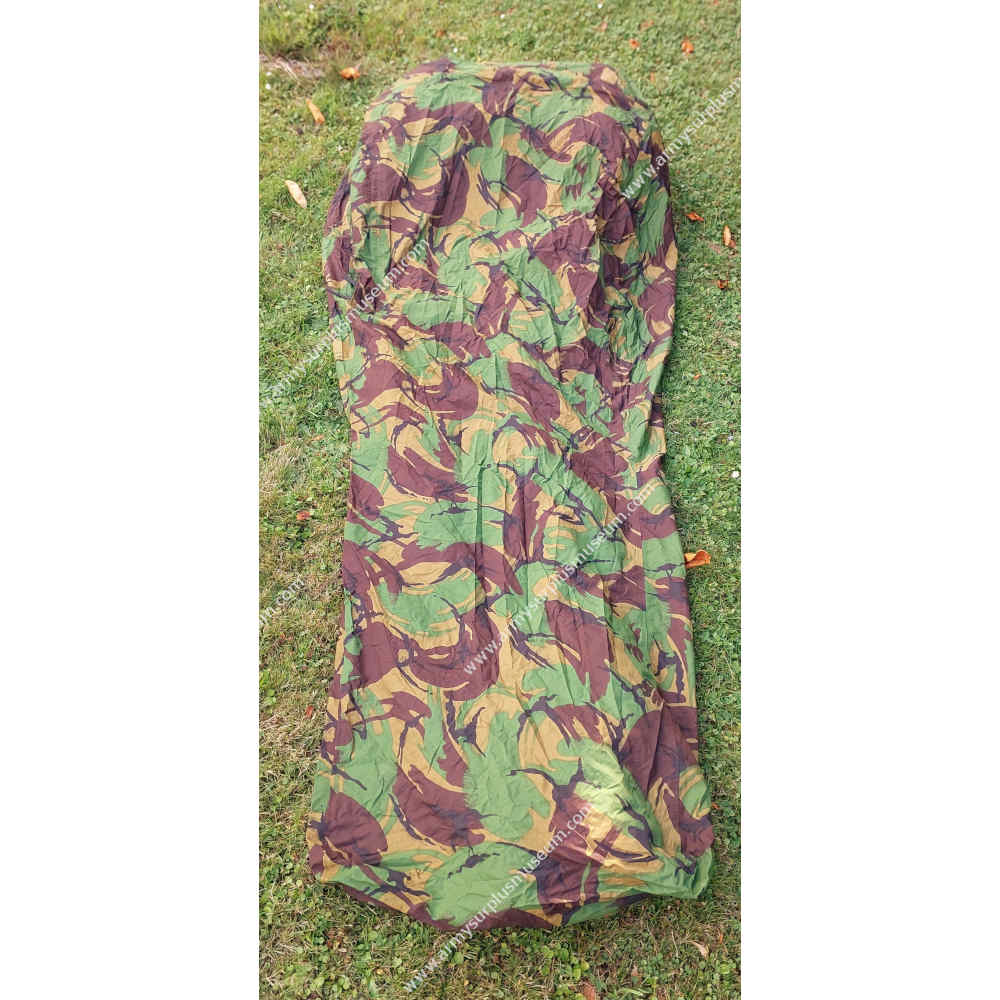
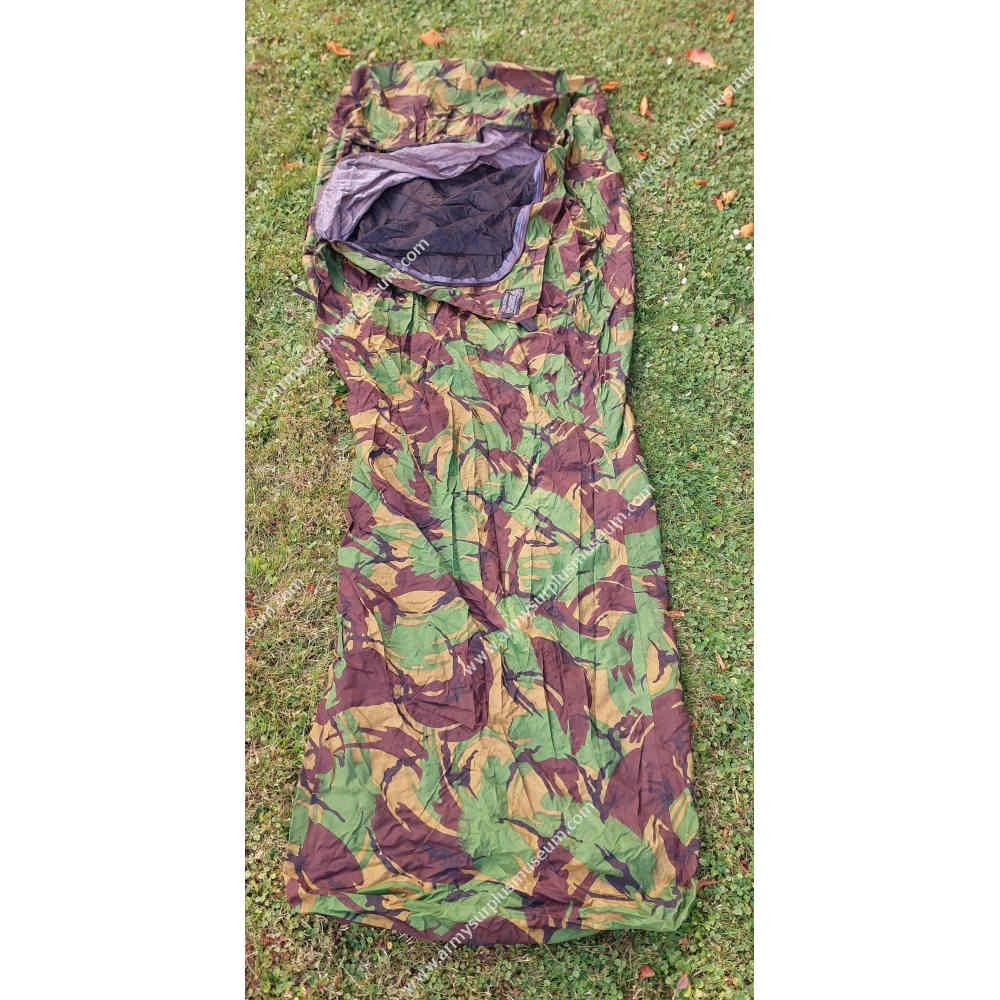
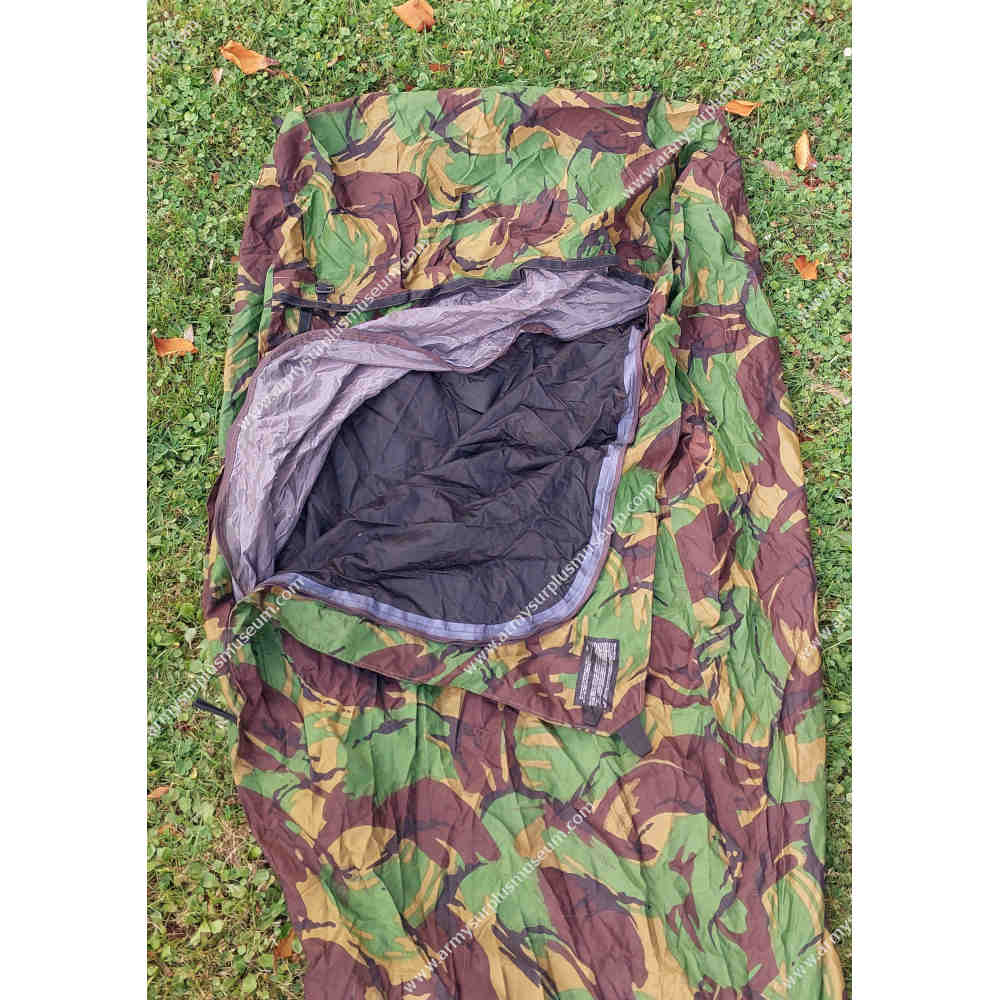
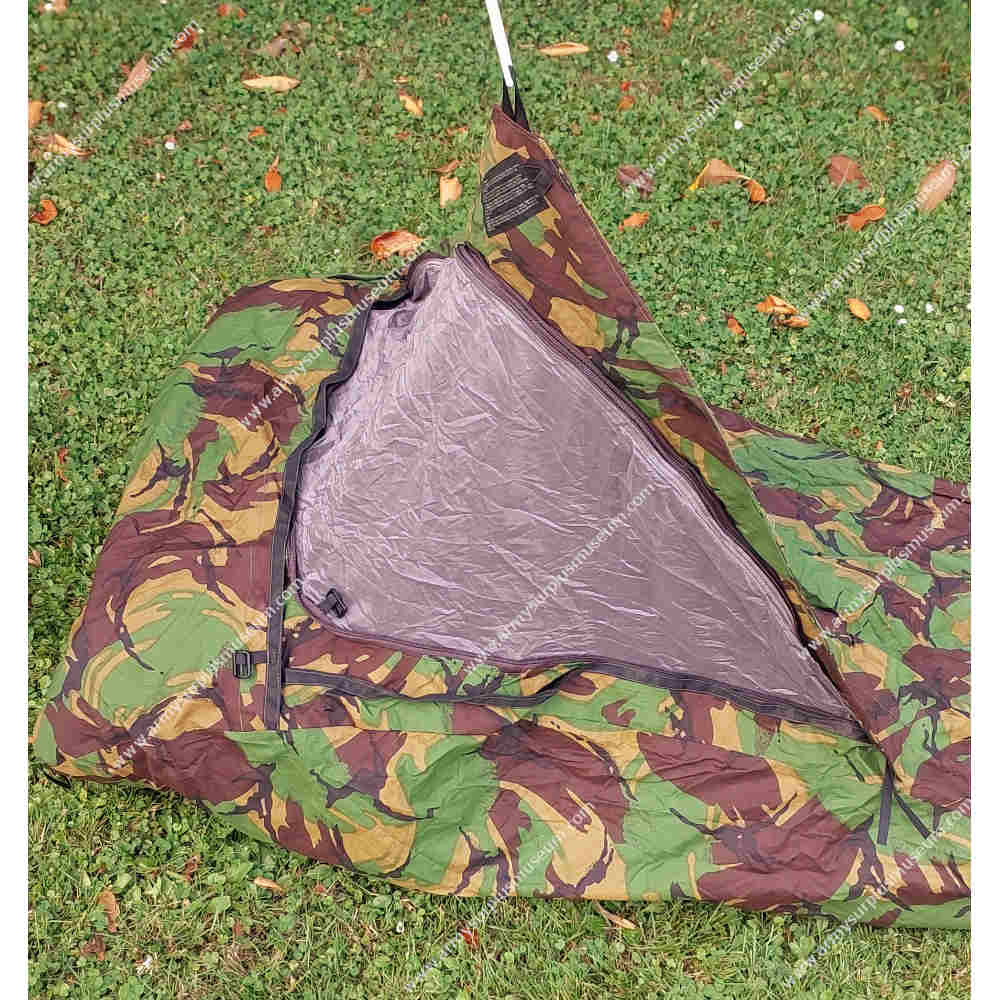
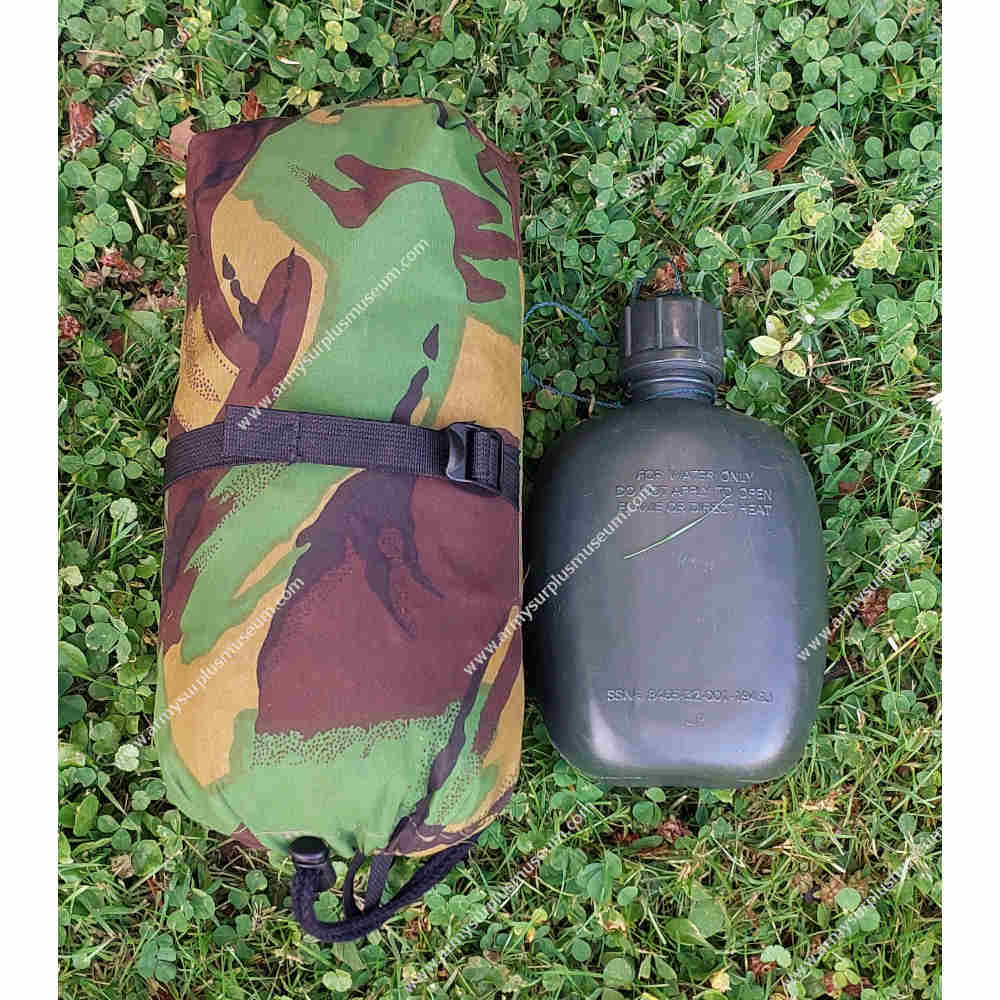
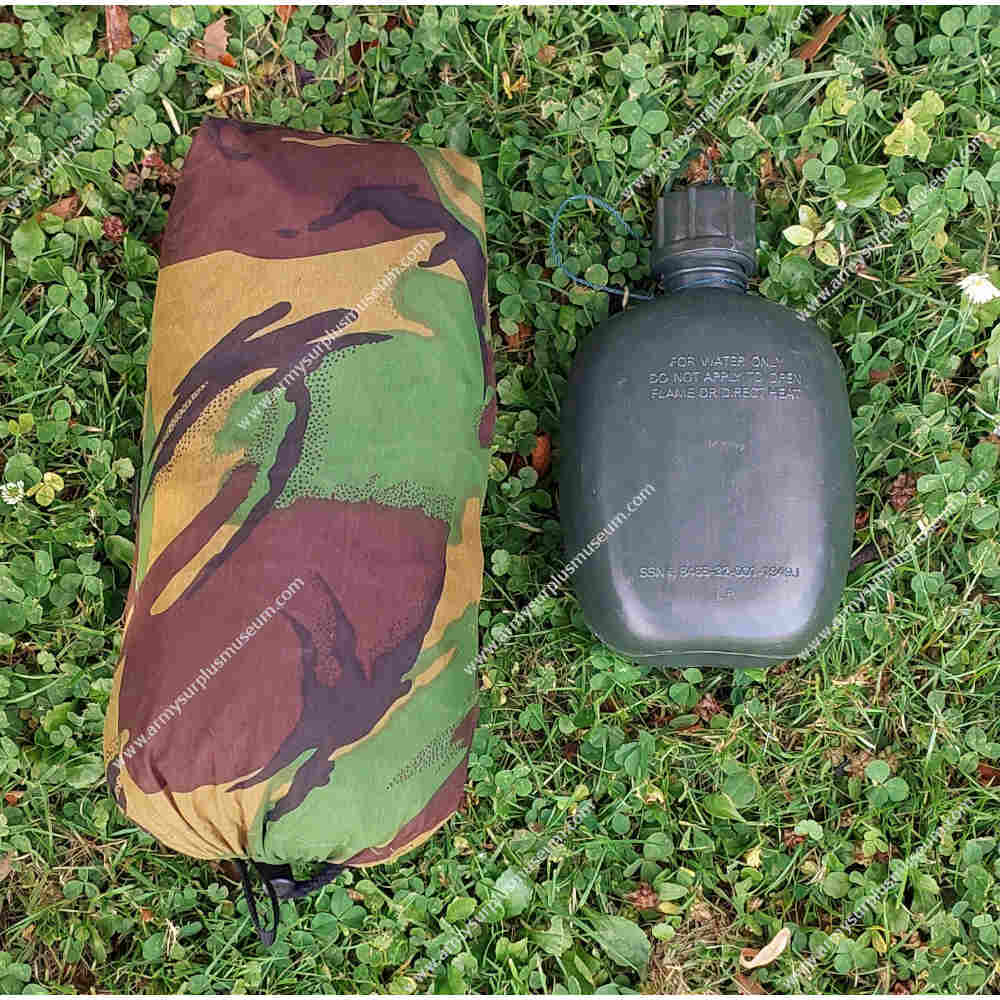
Object Number: 7578-554-36116.
1 Note 1: This is just a generic name, as we have yet to find its actual name.
